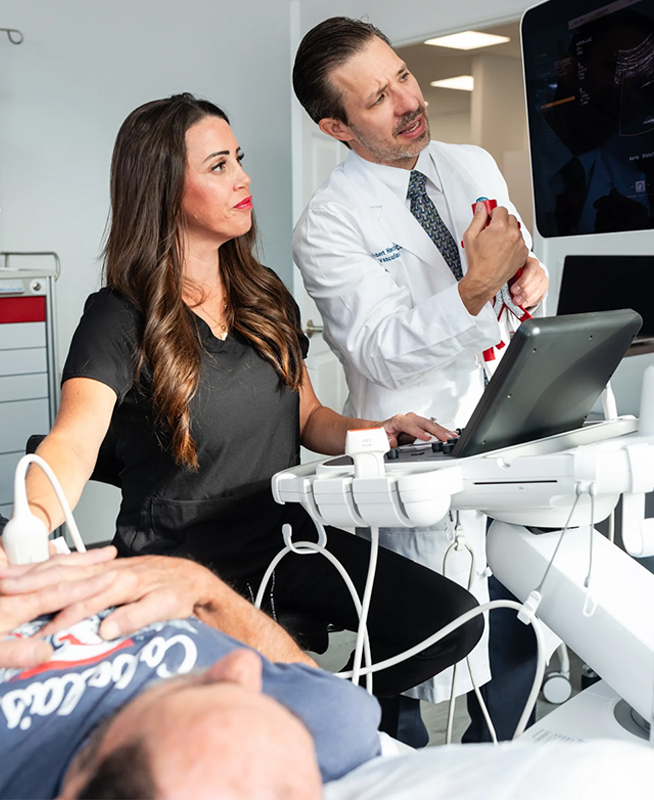
Vascular testing assesses blood flow and detects abnormalities in the circulatory system. Utilizing non-invasive techniques like ultrasound, Doppler imaging, and pressure measurements, Dr. Robert Hacker can provide insights into conditions like peripheral artery disease (PAD), deep vein thrombosis, and aneurysms. St. Louis Vascular Surgical Specialists offers comprehensive vascular testing in St. Louis to identify and treat the root cause of your vascular conditions.
What Is Vascular Testing?
Vascular testing refers to a range of diagnostic procedures aimed at evaluating the health and functionality of the circulatory system. Utilizing advanced technologies such as ultrasound imaging, Doppler ultrasound, and ankle-brachial index measurements, vascular testing provides detailed insights into blood flow dynamics, vessel integrity, and potential obstructions. These tests are vital for identifying conditions like atherosclerosis, peripheral artery disease (PAD), and venous insufficiency, enabling early intervention and preventing complications.
Dr. Robert Hacker, our double board-certified general and vascular surgeon, relies on vascular testing to guide clinical decision-making and treatment planning. By interpreting the results of these tests, Dr. Hacker can accurately diagnose vascular conditions, assess disease severity, and determine the most appropriate course of action for his patients.
What Can Vascular Testing Help With?
- Diagnosing peripheral artery disease (PAD) and assessing its severity
- Detecting deep vein thrombosis (DVT) and pulmonary embolism (PE)
- Evaluating the risk of stroke by assessing carotid artery health
- Identifying aneurysms in the aorta or other major blood vessels
- Monitoring the effectiveness of treatment for vascular conditions
- Assessing blood flow to extremities before surgery or vascular procedures
- Guiding decisions on medication management for hypertension and hyperlipidemia
- Screening for risk factors associated with cardiovascular diseases
- Identifying arterial blockages or narrowing that may require intervention
- Monitoring the progression of vascular diseases over time
Advanced Vascular Imaging Tests Offered At SLVSS
Carotid Duplex
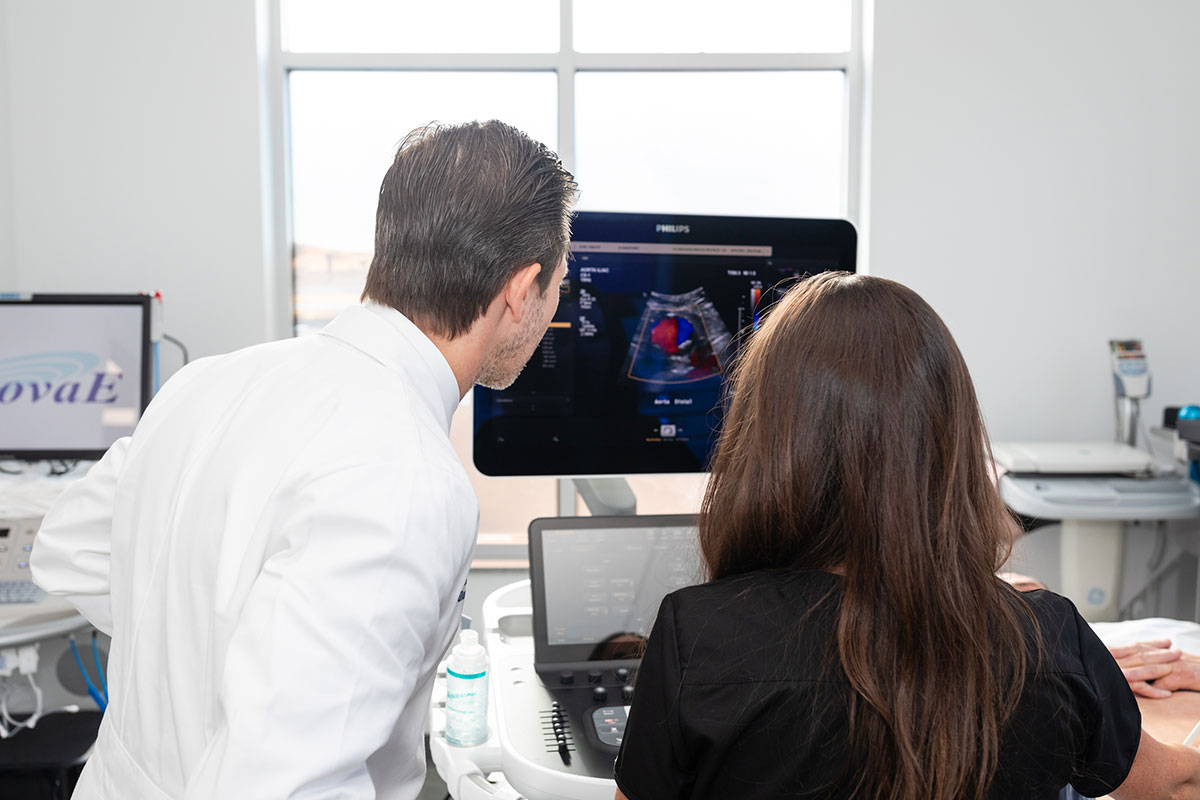
Carotid Duplex is a non-invasive imaging test that combines ultrasound imaging with Doppler ultrasound to assess the carotid arteries in the neck. High-frequency sound waves are transmitted through the tissues, and the echoes are recorded to create detailed images of the blood vessels. Doppler ultrasound measures the speed and direction of blood flow within the carotid arteries. This vascular testing in St. Louis is crucial for evaluating the presence of plaque buildup (atherosclerosis), which can narrow or block the arteries, increasing the risk of stroke.
Arterial Doppler
Arterial Doppler is a diagnostic test used to assess blood flow in the arteries of the lower and upper extremities. It uses Doppler ultrasound technology to evaluate the speed and direction of blood flow within these arteries. By measuring blood pressure at various points along the extremities, Arterial Doppler helps identify arterial blockages, narrowing, or abnormalities. This is crucial for diagnosing peripheral artery disease (PAD), characterized by reduced blood flow to the limbs due to arterial narrowing.
Abdominal Vascular Duplex
Abdominal Vascular Duplex is a comprehensive imaging test used to evaluate the blood vessels in the abdomen, including the aorta and its major branches, such as the renal and mesenteric arteries. This non-invasive test combines B-mode ultrasound imaging with Doppler ultrasound to visualize the anatomy of the abdominal blood vessels and assess blood flow characteristics. Abdominal Vascular Duplex is essential for detecting abdominal aortic aneurysms, renal artery stenosis, mesenteric ischemia, and other vascular conditions that can lead to complications.
Venous Duplex
Venous Duplex is a diagnostic imaging test used to evaluate the veins in the legs, arms, and other parts of the body. This test combines B-mode ultrasound imaging with Doppler ultrasound to visualize the veins’ anatomy and assess blood flow patterns. Venous Duplex is useful for diagnosing deep vein thrombosis (DVT), a condition characterized by blood clot formation in the deep veins of the body, and preventing complications like pulmonary embolism.
Hemodialysis Access and Maintenance
Hemodialysis access and maintenance involve specialized vascular imaging tests to assess the patency and function of vascular access sites used for hemodialysis treatment in patients with end-stage renal disease. This vascular testing in St. Louis includes Doppler ultrasound evaluation of arteriovenous fistulas (AVF) and grafts, as well as central venous catheters. By assessing blood flow within these access sites, clinicians can detect stenosis, thrombosis, or other complications that may affect dialysis efficiency. Early identification of vascular access dysfunction allows for timely intervention to restore adequate blood flow.
Vascular Screenings
Vascular screenings encompass a range of non-invasive tests to identify individuals at risk of developing vascular diseases or complications. These may include assessments such as ankle-brachial index (ABI) measurements, which evaluate blood pressure in the arms and ankles to detect peripheral artery disease (PAD). Other screening modalities may involve ultrasound imaging of the carotid arteries to assess stroke risk or evaluation of abdominal aortic diameter to detect abdominal aortic aneurysms.
What Are The Treatment Options For Vascular Testing?
At St. Louis Vascular Surgical Specialists, we prioritize personalized care tailored to your unique needs. Led by Dr. Robert Hacker, a double-board-certified vascular surgeon with extensive experience, we offer comprehensive treatment options to address your specific condition effectively. Dr. Hacker will meet with you, conduct the necessary vascular testing in St. Louis, and plan a custom treatment plan tailored to your individual circumstances and preferences.
Whether you require minimally invasive procedures such as angioplasty and stenting or complex vascular surgeries such as bypass grafting or endarterectomy, our team at SVSS is committed to delivering the highest standard of care. We understand that every patient is different, and we provide compassionate and individualized treatment that meets your expectations and helps you achieve optimal vascular health.
What Our Clients Are Saying
“I drive three hours to see Dr. Hacker! Traveling out of state for care isn’t always ideal. I did a lot of research and found Dr. Hacker. I let my PCP know that I would like my referral to go to him. They called me the very next day (Thursday) and scheduled me in their office for Monday! At that visit, they confirmed that I had more than one vascular compression. They listen, they care, and they get to work in a timely manner. I will continue to make the 3 Hour drive.”
-M.C.
“Dr. Hacker was fantastic; he was informative, and his staff was top-notch. The office worked with my work schedule and made me feel comfortable about the procedures and the process. I highly recommend them for anyone in need of vascular services.”
-A.T.
Vascular Testing FAQs
Why is vascular testing important before treatment?
It helps identify underlying circulation issues that may not be obvious from symptoms alone. This ensures treatment is accurately targeted.
Are vascular tests invasive?
Many vascular tests are non-invasive and use tools like ultrasound or pressure measurements. These methods are generally quick and comfortable.
What conditions can vascular testing detect?
Testing can reveal problems such as blocked arteries, poor blood flow, or vein dysfunction. These findings are critical for proper diagnosis.
How long do these tests usually take?
Most tests are completed within a short outpatient visit. The exact duration depends on the type of evaluation being performed.
Do results impact treatment decisions?
Yes, results directly guide the treatment plan. They help providers choose the most effective and safest approach.
How Should I Prepare For My Vascular Testing Appointment?
Preparation for vascular testing varies depending on the specific tests being performed. For most non-invasive studies such as Doppler ultrasound or ABI measurements, little to no special preparation is required. For certain abdominal vascular tests, you may be asked to fast beforehand. Dr. Hacker’s team will provide you with detailed pre-appointment instructions based on the type of testing ordered so you arrive fully prepared and your results are as accurate as possible.
Can Vascular Testing Detect Problems Before Symptoms Appear?
Yes, and this is one of the most valuable aspects of proactive vascular screening. Many vascular conditions, including peripheral artery disease, abdominal aortic aneurysms, and carotid artery disease, can progress silently without obvious symptoms until they reach a more serious or dangerous stage. Vascular screenings at SLVSS allow Dr. Hacker to identify early-stage disease and intervening risk factors before they develop into life-threatening complications, making early detection a critical component of long-term vascular health.
What Happens After My Vascular Testing Is Complete?
Once your vascular testing is complete, Dr. Hacker will review and interpret the results and discuss his findings with you in detail. As a registered physician for vascular interpretation (RPVI), he is uniquely qualified to analyze the data from your tests and translate it into a clear, actionable treatment plan. Whether your results indicate a need for lifestyle modifications, medication management, a minimally invasive procedure, or surgical intervention, Dr. Hacker will walk you through your options and help you make an informed decision about your care.
Why Choose Dr. Hacker For Your Vascular Testing In St. Louis?
St. Louis Vascular Surgical Specialists is your gateway to expert vascular care. Led by the esteemed Dr. Robert Hacker, a double board-certified general and vascular surgeon and a registered physician for vascular interpretation (RPVI), we are committed to helping you achieve and maintain optimal vascular health. We don’t just treat you as a patient; we welcome you as a member of our extended family and offer treatments that ensure optimal outcomes. Schedule your consultation with Dr. Hacker to address your unique vascular needs and get your vascular testing in St. Louis.
Schedule a
Consultation
At St. Louis Vascular Surgical Specialists, we are committed to providing accessible, high-quality care. We accept most major insurance plans to help meet your healthcare needs. For questions about coverage or to verify your insurance, please contact our office today.